Lucien M. Dupuy
2025 Regional Award Finalist — Post-Doc
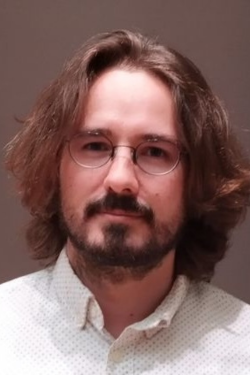
Current Position:
Postdoctoral Associate
Institution:
Université de Strasbourg
Discipline:
Theoretical Chemistry
Current Position:
Postdoctoral Associate
Institution:
Université de Strasbourg
Discipline:
Theoretical Chemistry
Recognized for: Developing quantum-classical and machine learning simulations that elucidate how molecules respond to light, crucial to understanding diverse topics like DNA stability, photocatalysis, and energy conversion
Areas of Research Interest and Expertise:
Photochemistry, Machine Learning, Quantum Chemistry, Quantum Dynamics
Previous Positions:
BS, University of Montpellier, France
MS, University of Montpellier, France
PhD, University of Montpellier, France (Advisor: Yohann Scribano)
Postdoctoral Fellow, Rutgers University, Newark (Advisor: Neepa Maitra)
Postdoctoral Associate, Université de Strasbourg, France (Advisor: Emmanuel Fromager)
Research Summary:
Lucian Dupuy, PhD, develops computational methods to simulate how molecules respond to light at the atomic level, a key process in solar energy, DNA stability, and photocatalysis. Dupuy designed a new approach that more accurately captures interactions between electrons and nuclei, improving on standard simulation techniques. To address the high cost of electronic property calculations, Dupuy also extended a machine learning framework to predict excited-state behavior with greater speed and accuracy. This work enables reliable, efficient simulations of complex light-driven processes, opening new directions in photochemistry, materials science, and the study of ultrafast molecular dynamics.
“Predicting dynamics of molecules excited by light requires building delicate abstractions of the intractable quantum dance of electrons and nuclei. I develop AI-powered algorithms in original representations to enable accurate computer simulations.”
Key Publications: