Maxie M. Roessler
2026 United Kingdom Award Finalist — Faculty
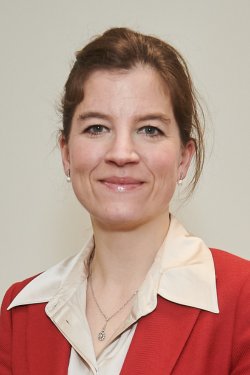
Current Position:
Professor of Chemistry
Institution:
Imperial College London
Discipline:
Analytical Chemistry
Current Position:
Professor of Chemistry
Institution:
Imperial College London
Discipline:
Analytical Chemistry
Recognised for: developing powerful electron paramagnetic resonance techniques to track short-lived radicals, revealing how electron transfer powers cellular energy production, photosynthesis, and fundamental catalysis.
Areas of Research Interest and Expertise:
Spectroscopy (Electron Paramagnetic Resonance), Enzymology, Electrochemistry, Catalysis
Previous Positions:
Research Summary:
Many of life’s most important reactions, such as producing energy currency in cells and capturing sunlight in photosynthesis, depend on the transfer of electrons through highly reactive states. However, these states are extremely short-lived, making them difficult to capture. Maxie Roessler, DPhil, has developed innovative ways to observe unpaired electrons, called radicals, within these reactions using electron paramagnetic resonance (EPR) spectroscopy. These breakthroughs revealed hidden steps in respiration and photosynthesis, identified highly reactive molecules in cell membranes linked to ageing, and are enabling the design of more efficient catalysts and functional materials. Roessler’s methods are widely applicable, reshaping how scientists study energy conversion and chemical reactivity.
“I am honoured to be named a Blavatnik Laureate for my group’s work on tracking how electrons move within biomolecules and functional materials. We are excited to build on this foundation to enhance our understanding of electron transfer in biology and technology.”
Key Publications:
Other Honors:
2024 Joseph Black Prize, Royal Society of Chemistry
2023 President’s Medal for Excellence in Research, Imperial College London
2022 EuroBIC Medal, European Bioinorganic Chemistry
2022 Best Paper Award (for Nat. Commun. 2021), International EPR Society
2016 Outstanding Contribution to Teaching Award, Queen Mary University of London
2012 DPhil Thesis Commendation for Exceptional Examiner’s Comments, University of Oxford
2011 Jeol Prize (Runner Up), Electron Spin Resonance Group of the Royal Society of Chemistry
2011 Vice Chancellor’s Award for DPhil Work, University of Oxford
2010 Margaret K. B. Day Scholarship for Excellence in Doctoral Research, British Federation of Women Graduates
In the Media: